

Research Project
ORR Catalyst Discovery

Technology Readiness Level
TRL 1–2 Early stages of innovation focused on foundational science and concept formation
 Energy Generation and Storage
Discovering and improving materials to accelerate the oxygen reduction reaction
Oxygen reduction reaction (ORR) is a key step in fuel cells and related electrochemical energy-conversion devices. In a fuel cell, hydrogen and oxygen combine to generate electricity, and the main exhaust product is water (H₂O). Better ORR materials can improve efficiency and durability so these systems operate reliably over time.
Project Goals
Improving performance and stability of fuel cells
This project aims to identify and optimize ORR-active catalyst materials and electrode designs to improve performance and long-term stability in fuel cells and related electrochemical conversion platforms. We evaluate candidates using application-relevant metrics, including activity, durability, and behavior under realistic operating environments. The objective is to accelerate down-selection toward catalyst solutions that can transition from discovery to validation and future prototyping.
Applications
- Fuel Cell Transportation: Improved Oxygen Reduction Reaction (ORR) catalysts can enhance efficiency and durability in hydrogen fuel cells, supporting cleaner vehicles with longer lifetimes and lower costs.
- Stationary Power Systems: High-performance ORR materials can increase reliability in backup and distributed fuel cell power systems, enabling stable, low-emission electricity generation.
- Electrochemical Conversion Platforms: Optimized ORR catalysts can strengthen performance in emerging electrochemical technologies, accelerating the transition from materials discovery to real-world energy applications.
Project Status
- TRL 1–2: Early stages of innovation focused on foundational science and concept formation
Why it Matters
By identifying durable, high-activity catalysts under realistic conditions, this project reduces technical risk and accelerates commercialization, thereby supporting lower-cost fuel cells, clean transportation, resilient power, and broader decarbonization.
Project Team
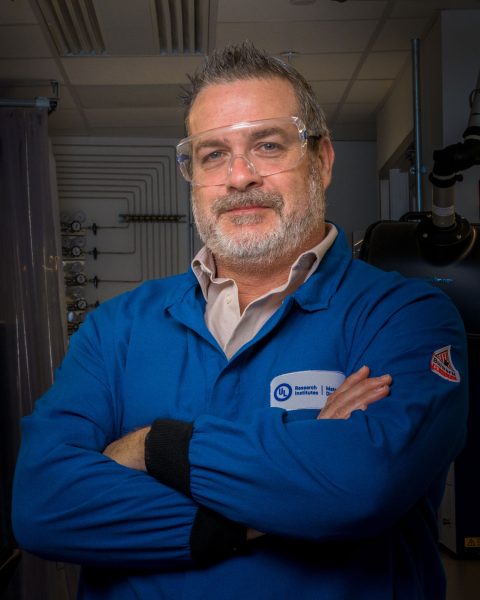
Jorge González, Ph.D.

Sara Williams
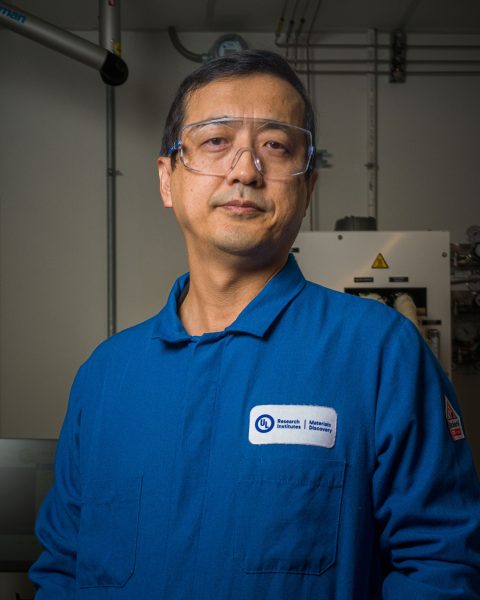
Jeff Wu, Ph.D.

Haley Tholen, Ph.D.

Soojin Zeman, Ph.D.

Uzoma Nwabara, Ph.D.